
Making Bösendorfer More Austrian
I have to admit, I let out a big sigh 6 years ago when I found out that Bösendorfer was [...]

What is a House Brand Piano?
If I would ask you to name 20 brands of pianos, how would you answer? Could you name 5 or [...]

The Ins and Outs of Piano Moving
“George… hands”. I was 22 at the time and this seasoned piano mover was a man of few words. [...]

Researching Pianos - The Bridge
In the last 2 articles, we examined the hammers and strings, which are primarily responsible for the initial impact of [...]

Pianos With Headphones? Big Noise About Being Quiet
Recently, silent or quiet pianos have become more prevalent in piano manufacturing. In fact, in our Virtual Piano Trade Show, [...]
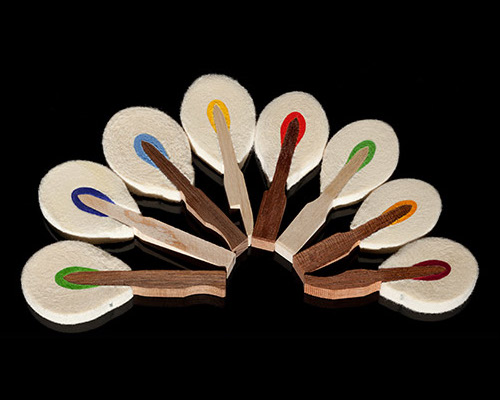
Interview with Norbert Abel - Abel Hammer
Behind the scenes in the piano business it’s a very small world. You won’t last but 10 minutes before you [...]

Mapes Piano String Company - How Piano Strings are Made
Stephen Mapes established the Mapes Piano String Company in 1912 and shortly thereafter in 1918 it was purchased by John [...]

Visiting Petrof Piano
I walk up the stairs of the bell tower in the town of Hradec Králové (“City of the Queen”). The [...]

How Old Is Too Old?
Nothing beats a new piano and Piano Price Point is dedicated to delivering the news about the makers of new [...]

You may not have heard about Bechstein, but you’ve definitely heard Bechstein
Queen – Bohemian Rhapsody
The Beatles – Hey Jude
Elton John – Your Song
David Bowie – Life on Mars
Carly Simon – You’re [...]

Why Upgrade From An Upright Piano To A Grand Piano?
I’ve heard this statement many times. In fact it happened when I was a young. The piano teacher states, “Your [...]

Interview with Udo Steingraeber
You don’t need to look at the artist page of Steingraeber Piano for too long before you start to realize [...]

The C. Bechstein Sphinx Grand Piano
There’s a church in Dresden called Frauenkirche (translated “Church of our Lady”) which was bombed on February 15th, 1945 during [...]

Laoureux Dampers
Today’s topic is piano dampers. When your finger depresses a key on the piano, the string vibrates allowing us to [...]

Pearl River New Factory Grand Opening
Pearl River Piano Group has grown to be the largest piano manufacturer in the world, producing more than 400 pianos [...]

How Much Is My Piano Worth?
The value of a piano is obvious ~ it’s the music that you make with it. But often, families are [...]

What's a Piano Cloud? QRS Music
You get your cup of coffee and log in to your computer. “Hmmm… not a lot of practicing from these [...]

Making the Perfect Piano Black
Have you ever heard someone describe an object as being “jet black”? Jet is derived from the French word “jaiet”, [...]

Hailun Piano Factory ~ A First Glimpse
Three weeks ago I was in a discussion with Basilios Strmec of Vienna International (North American distributers for Hailun, Petrof [...]

Steinway Presents The Skyline Collection
The term “art case” refers to a piano cabinet that has been visually enhanced. Historically, pianos were often owned by [...]

Why Upgrade to a Professional Level Piano?
Last month we looked at why upgrading happens from an electronic keyboard to a real piano. This month, we delve [...]
How To Buy A Piano
The thought of buying a piano can be exciting but it can also be a bit intimidating or daunting, especially [...]

Hailun Piano Innovation
Earlier this year at NAMM I interacted with Mr. Hailun Chen – truly a privilege and honour to connect with [...]

Player Pianos in the 21st Century
A Voice from the Past
“Step right up… See the amazing piano that plays by itself!” I can just hear the [...]

Latest Cosmetic Trends in Pianos
To prove artistry and craftsmanship in the late 1800’s, pianos were intricately and ornately carved. As the Victorian era ended [...]

Why Upgrade from a Digital Piano to a Real Piano?
The teacher has said “It’s time you start looking for a real piano and move up from a keyboard. You’ve [...]

Estonia Piano Company Redefines Tone
Have you ever heard of the company called Estonia Piano? Appropriately they are named after the country in which they [...]

Who Is Grotrian?
The World Fair became The World Exposition which became Expo as we know it. I stumbled upon a book about [...]

Baldwin Piano Then And Now
If you live in North America, you’ll surely be aware that Baldwin is a household name. In fact, my first [...]

Why Do Piano Keys Stick?
Aside from tuning the piano, there’s one question that gets asked more than any other. “Can you fix a sticking [...]

Yamaha CFX Concert Grand Latest Release
I used to have a teacher who would frequently say, “For every single grade point PAST 80%, it takes as [...]

Michael Spreeman - Ravenscroft Piano Interview
This month I had the great privilege of interviewing Michael Spreeman, owner and founder of Ravenscroft pianos. They are a [...]

Mason & Hamlin VX-94 Concert Grand Piano Review
It’s not every day a new concert grand gets unveiled. In my mind, concert grands are the Formula 1 pianos [...]

The Big Trade Show 2025 - NAMM
During the performance of Jacob Collier at the most recent NAMM show I was reminded that music makes us human, [...]

Keybird ~ A New Portable Piano
Many years ago, I remember seeing a piano in a museum similar to the one shown above (built in 1787 [...]

Pearl River and Schimmel Alliance
Recently I sat down with June Wang from Pearl River Piano Group and corresponded with Rob Slayman from Schimmel Piano [...]

How Often Should I Tune My Piano?
Over the last few years, I decided to run a few ultra-marathons (marathons run on trails in the forest). And [...]

Kayserburg 3D Printed Grand Piano
It’s obvious that car makers in the 60’s were looking at the birth of air travel as the way of [...]

Inside the Steinway Vault
Have you heard of the Steinway Vault? Deep in the basement of the factory in New York City, the Vault [...]

Renner Piano Parts Manufacturing
“World War II – July, 1944 ~ 71 years ago almost to the day, 85% of the Renner factory was [...]

Public Domain Sheet Music
If there were one word that I would use to describe myself it’s tactile. When I’m not in the garage [...]

Visiting Pearl River Factory
On this latest trip to China, I managed to catch a glimpse into the transformation of Pearl River Piano. Already [...]

Piano Sizes ~ What Should I Buy?
I’ve heard this statement many times “I don’t want a concert grand, I’m looking for more of a baby grand”. [...]

Musical and Mechanical Basics of the Damper (Sustain) Pedal
I remember teaching my kids how to drive a car. At first it’s a bit daunting putting a young adult [...]

Optimizing Piano Acoustics At Home
“Just place the piano up against the wall”. It’s a common statement told to piano movers. But why should a [...]

Bösendorfer Secession Grand Piano
Definition: Secession – se·ces·sion /səˈseSHən/- to withdraw formally from an alliance, federation, or association, as from a political union, a [...]

The Sostenuto Pedal
There has never been said any words in the piano industry that are more divisive than “But does it have [...]

Researching Pianos - The Soundboard
When doing research on pianos, what role does the soundboard play? After a key is struck on the piano, the [...]
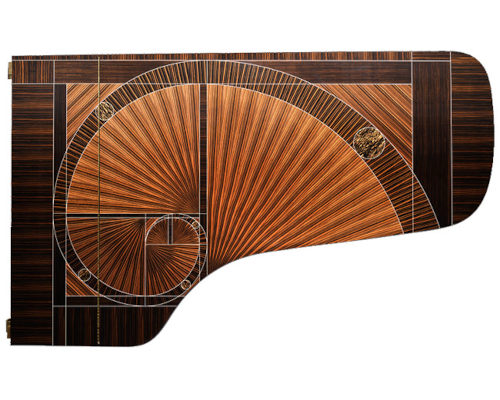
Steinway Fibonacci Grand Piano
In the late 1980’s, I was completing high school and thought it would be interesting to try out the new [...]

Researching Pianos - Hammer Felt Matters
I’ve heard this statement many times before: “I’m just doing my research on what piano to buy”. But what does [...]